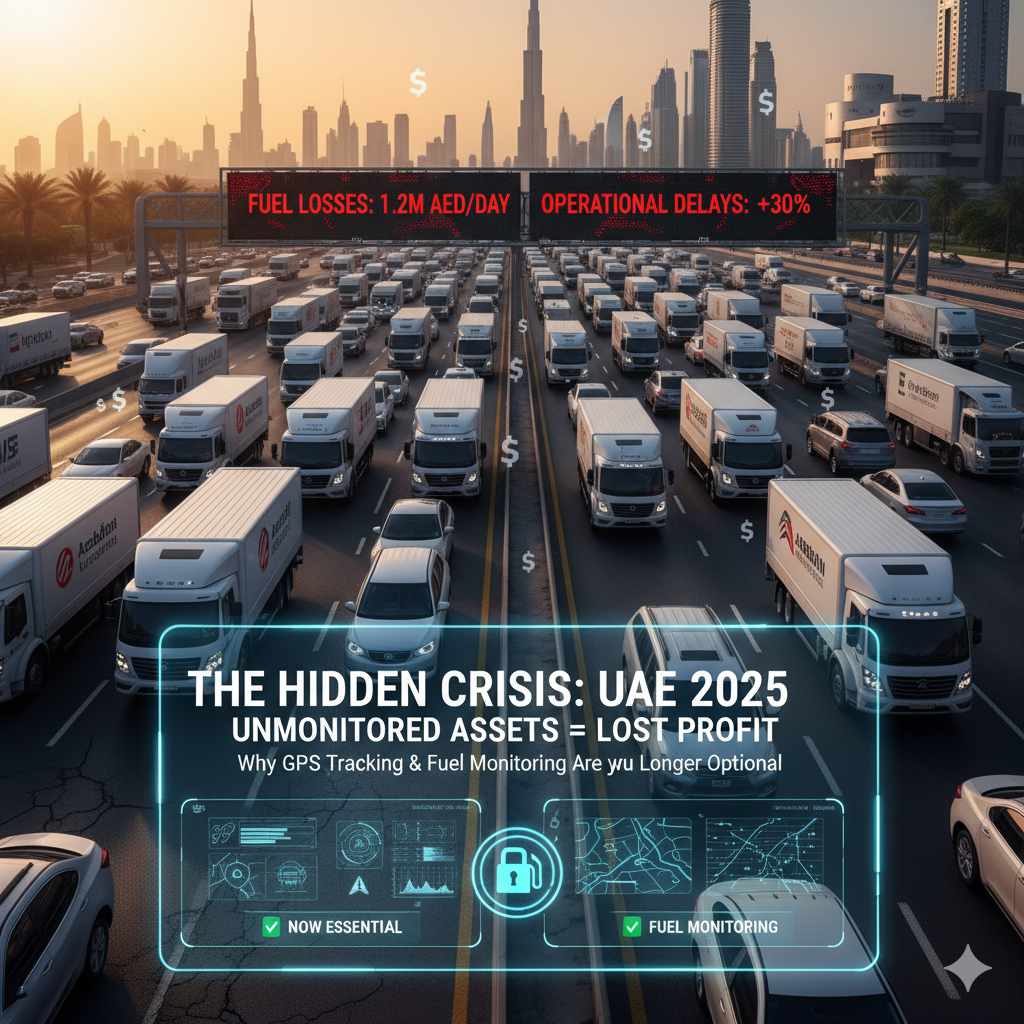
Fuel is the single largest operating cost for most commercial fleets in Saudi Arabia, typically running between 28% and 42% of total cost of ownership in 2026. After three rounds of fuel-pricing adjustments since 2018, KSA diesel sits at SAR 1.10–1.66 per litre and Petrol 95 at SAR 2.33 per litre — high enough that even a 5-percentage-point reduction in fuel burn moves a large fleet's operating margin meaningfully.
This guide walks through the twelve tactics we have seen pay back in under twelve months on fleets ranging from 30 to 3,000 vehicles. Each tactic includes the typical savings range, the implementation steps, and the KSA-specific context that makes it work — or not. Combine four or five of them and 15–35% fuel savings inside a year is realistic.
1. Establish a real fuel-burn baseline
You cannot reduce what you cannot measure. Most KSA fleets still rely on fuel card receipts averaged over a month — a number too lagging and too coarse to drive change. The fastest fix is to install CAN-bus or LLS (level-line sensor) integration on at least 20% of the fleet, run it for 30 days, and use the data as your baseline.
- Connect to the OBD-II or J1939 CAN-bus to read instantaneous fuel rate
- On older trucks, install an LLS-4 or LLS-AF tank-level sensor (cost: SAR 350–550 per vehicle)
- Match every fill-up to a vehicle and driver — eliminate "fleet card" pooling
- Report fuel economy in litres per 100km AND litres per engine-hour (idling shows up only in the second metric)
2. Eliminate idling — the biggest summer cost
A long-haul truck in Saudi Arabia idles 4–7 hours per day in summer to keep the cab A/C running during driver rest. At an idle burn rate of 2–4 litres per hour, that is SAR 12–28 per vehicle per day in pure waste — multiply by a 200-truck fleet over a 6-month summer and you get SAR 432K–1M annually evaporating into the Riyadh heat.
- Set automated idling alerts (>5 min triggers SMS + dashboard flag)
- Score drivers monthly on idle ratio and tie 5–10% of variable pay to it
- For long-haul, evaluate auxiliary cab cooling units (APUs) — payback in 14–24 months on Riyadh–Dammam routes
- For pickup and service fleets, enforce engine-off rules at customer sites
3. Score and coach driver behaviour
Aggressive driving — harsh acceleration, hard braking, speeding, and over-revving — accounts for 8–15% of fuel waste on most KSA commercial fleets. The classic implementation pattern is a 100-point score per driver per week, weighted across four events, with the bottom quartile receiving a coaching session.
- Track 4 events: harsh acceleration (>0.35g), harsh braking (>0.4g), speeding (>10% over posted limit), and idling
- Publish a weekly driver league table — peer pressure does the heavy lifting
- Pair the bottom 10% with a coach for one ride-along per quarter
- Tie 10–15% of monthly bonus to driver score (where labour law allows)
4. Optimize routes — especially in Riyadh and Jeddah peak hours
Riyadh and Jeddah are now in the top 30 most-congested cities globally. A delivery van on a 12-stop daily route can lose 22–35 minutes and burn 1.5–2.5 extra litres just by leaving its depot at 7:30 AM instead of 6:15 AM. Route optimization software pays back faster in KSA than in most other markets for exactly this reason.
- Implement multi-stop route optimization (TSP-style) for any fleet doing 8+ stops per vehicle per day
- Shift starting times earlier — pre-7 AM dispatches save 18–30% of fuel on Riyadh delivery routes
- Use real-time traffic feeds (Google, HERE, or local) for dynamic re-routing during peak hours
- For long-haul, plan around the King Fahd Causeway and Eastern Province port congestion windows
5. Monitor tyre pressure (the silent fuel drain)
Saudi Arabia's climate is brutal on tyres. A 20°C swing between night and midday changes tyre pressure by roughly 2 PSI; under-inflation by 6 PSI cuts fuel economy by 3% on highway routes. Add the Eastern-Province highway speeds and the result is a measurable fuel penalty that almost no KSA fleet tracks today.
- Install TPMS (tyre pressure monitoring sensors) on long-haul and inter-city routes — payback under 14 months
- Set up dashboard alerts for pressure deviations >10% from spec
- Standardize cold-pressure check protocols at depot exit
- Track tyre wear rate per axle per driver — outliers indicate alignment or driving issues
6. Detect fuel theft and card fraud
Fuel theft remains the most under-reported cost line on KSA fleets. The pattern is well known: drivers buy fuel on a fleet card, then siphon part of it to sell at half price, or buy diesel for personal vehicles using the company card. With a fuel-level sensor and GPS, every tank fill can be reconciled to a litres-added-to-tank reading — anomalies become impossible to hide. For the full method-by-method breakdown, see our dedicated guide on fuel theft detection in Saudi Arabia.
- Install LLS-4 or LLS-AF tank sensors on diesel fleets
- Reconcile every fuel-card transaction against tank-level rise within 30 minutes
- Flag mismatches >3 litres for investigation
- Geofence fuel-card use to approved stations during driver shift hours
- Review tank-level drops outside operating hours — siphoning leaves a clear signature
7. Use predictive maintenance to keep engines efficient
A diesel engine running with a clogged air filter, dirty injectors, or a failing oxygen sensor can burn 5–12% more fuel than the same engine in good health. Predictive maintenance based on CAN-bus DTC (diagnostic trouble code) telemetry catches these issues before they show up as a fuel-economy regression.
- Stream DTCs from the engine ECM to your fleet platform in real time
- Set service intervals based on engine hours and load profile — not just odometer
- Track per-vehicle fuel economy weekly; investigate any vehicle drifting >5% worse than its 90-day baseline
- Schedule injector cleaning and air-filter replacement on a fixed cadence (every 30K–40K km in KSA dust conditions)
8. Geofence and curb unauthorized usage
After-hours and weekend personal use of company vehicles can quietly cost 6–12% of total fuel spend on light-duty fleets. Geofencing — combined with shift-window rules — stops the leak without micromanaging drivers.
- Define authorized operating zones per vehicle (city, district, customer site)
- Set shift-hours boundaries (e.g. vehicle must be at depot between 22:00–05:00)
- Trigger SMS alerts on breach to the dispatch supervisor
- Auto-generate a weekly exceptions report — the social pressure of being on the report tends to fix the behaviour
9. Shift to off-peak operating windows
Where contracts allow, moving deliveries to night or early-morning windows produces compounding savings: less idling in traffic, lower A/C load on engine, and faster routes. KSA night logistics is a growing category for exactly this reason.
- Renegotiate B2B delivery windows to allow 22:00–06:00 dispatch where possible
- Use night dispatch for inter-city long-haul (Riyadh–Jeddah, Riyadh–Dammam)
- Combine with route optimization — the savings stack
- Confirm driver labour-law and rest-period compliance before scheduling
10. Right-size the fleet (and electrify the last mile)
Most KSA fleets are over-vehicled by 8–18%. Telematics utilization data — engine hours per vehicle per week, distance per vehicle per month — makes the over-supply visible. For high-utilization last-mile delivery in Riyadh and Jeddah, EV pilots are now showing 60–70% lower per-km energy cost vs petrol equivalents.
- Pull 90-day utilization per vehicle; identify the bottom 15% by engine-hours
- Reassign or sell underutilized vehicles before lease renewal
- For new last-mile additions in Riyadh/Jeddah, run a 5-vehicle EV pilot — total cost per km is lower than petrol once charging is set up
- For long-haul, monitor the early KSA hydrogen-fuel-cell pilots but do not commit yet
11. Consolidate fuel suppliers and renegotiate
Saudi fuel pricing is regulated, but the value-added services around fuel cards (rebates, on-credit terms, station network density, expense reporting) vary widely between providers. Most fleets review their fuel-card supplier once and then never again — leaving 1–3% of fuel spend on the table.
- Run a competitive RFP across the major KSA fuel-card providers every 24 months
- Negotiate volume rebates above your annual litres-purchased threshold
- Standardize on one card programme to consolidate reporting
- Integrate the card data feed into your fleet platform for automatic transaction reconciliation
12. Use AI-powered forecasting and budget controls
The newest tactic on this list — and the one with the longest payback. AI fuel-forecasting models trained on 12+ months of fleet telematics data can predict next-month fuel spend per route, per vehicle, and per driver to within 4–6% accuracy. That precision lets you set per-vehicle fuel budgets, flag overruns within days rather than at month-end, and pre-empt anomalies (theft, leaks, mechanical issues) before they compound.
- Feed at least 12 months of telematics data into a forecasting model
- Set per-vehicle weekly fuel budgets based on historical route profile
- Auto-flag deviations >15% above forecast within 24 hours
- Use the model to evaluate proposed route or schedule changes before rolling them out
Estimated savings: stack the wins
Individual tactics rarely deliver headline savings on their own. The compounding effect is what matters — most fleets that implement four or more tactics see 15–35% total fuel reduction within 12 months. Approximate ranges below are based on the IOTee installed base.
| Tactic | Typical fuel saving | Payback period | Effort to implement |
|---|---|---|---|
| 1. Baseline + LLS sensors | 0% (enables others) | N/A | Medium |
| 2. Idling reduction | 6–12% | 2–4 months | Low |
| 3. Driver behaviour scoring | 5–10% | 3–6 months | Low |
| 4. Route optimization | 8–15% | 4–8 months | Medium |
| 5. Tyre pressure (TPMS) | 2–4% | 10–14 months | Medium |
| 6. Fuel theft detection | 4–9% (recovery) | 4–8 months | Medium |
| 7. Predictive maintenance | 3–7% | 8–14 months | High |
| 8. Geofencing | 3–6% | 2–4 months | Low |
| 9. Off-peak operations | 5–10% | 3–6 months | Medium (contracts) |
| 10. Right-sizing fleet | 5–18% | 6–12 months | High |
| 11. Fuel supplier RFP | 1–3% | 1–2 months | Low |
| 12. AI forecasting | 2–5% (anomaly catch) | 12–18 months | High |
Want a fuel-savings audit on your current fleet?
Send us 90 days of fuel-card data and a vehicle list. We will return a per-vehicle waste analysis and a ranked list of which of these 12 tactics would pay back fastest on your specific fleet — no commitment.
Request a fuel audit →Where to start: a 90-day plan
If you are starting from a basic GPS tracking deployment with no fuel sensors and no driver scoring, the fastest sequence we recommend is:
- Days 1–14: Stand up a fuel-burn baseline using existing GPS data and 30 days of fuel-card transactions. No hardware needed yet.
- Days 15–30: Roll out idling alerts and a weekly driver league table. Expect 5–10% saving in the first 60 days.
- Days 30–60: Install fuel-level sensors on the top 30% of vehicles by fuel spend. Begin theft reconciliation.
- Days 60–90: Add route optimization on the routes with the highest fuel spend per stop. Negotiate fuel-card rebate.
Most of our customers are at 12–18% measured fuel-cost reduction by the end of the 90-day plan, with another 5–15% layered in over the following six months as predictive maintenance, TPMS, and AI forecasting come online.